FIELDNOTES / Politics & Society
Feminism and Myths
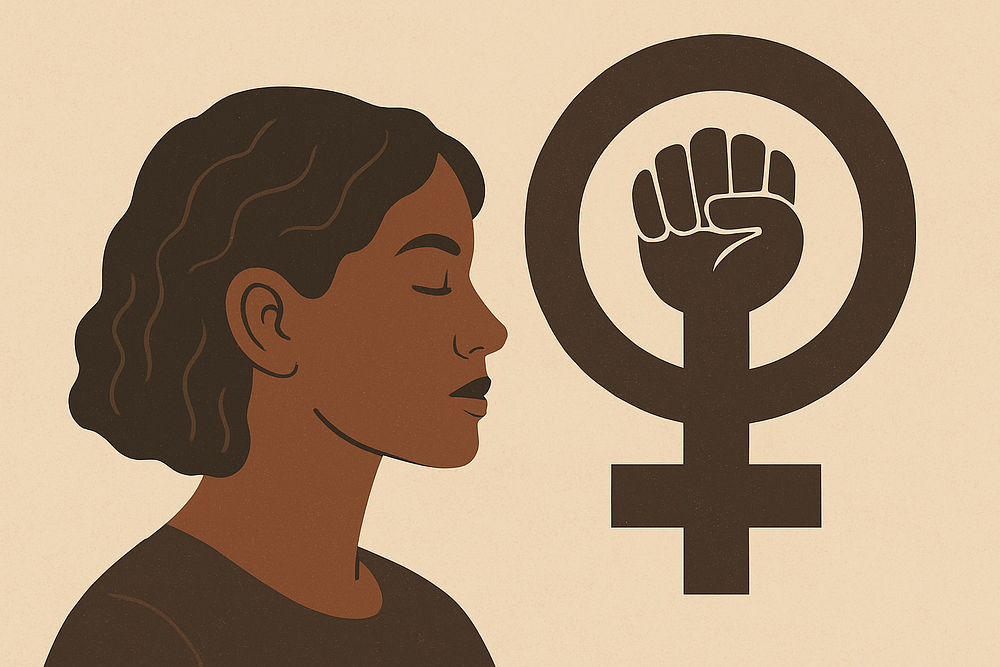
Feminism, the movement that shapes our future in the most profound way
Feminism, in its simplest definition, is about empowering women and ensuring equal rights. Yet, like any major social movement, it has sparked debate, inspired change, and invited controversy. Along the way, it has gathered both champions and critics. Some credit it with liberating society, while others blame it for modern discontent.
However, many of these sweeping claims rely on selective memories and persistent myths. To understand what feminism has actually changed, and what it never claimed to solve, we must revisit the past with a clearer perspective.
The Misunderstood Pain of the Past
Many argue that women today are more depressed, stressed, and less fulfilled than they were in the 1950s, often attributing this to feminism. This is an oversimplification of history. Women in the 1950s were not necessarily happier. In many cases, they simply had fewer opportunities to express dissatisfaction or change their circumstances.
The post-war ideal of domesticity was heavily reinforced through advertising, popular magazines, and social expectations. Publications such as Ladies' Home Journal frequently portrayed domestic life as the defining aspiration of womanhood. Women who wanted careers or lives beyond traditional domestic responsibilities often faced considerable social resistance.
This does not mean every woman was unhappy with domestic life. Many found genuine fulfilment in raising families and managing households. The problem was not domesticity itself, but the limited freedom to choose an alternative.
Sociologist Mirra Komarovsky explored these tensions in her 1953 book Women in the Modern World: Their Education and Their Dilemmas. She examined how educated women struggled between their ambitions and the expectations placed upon them by traditional gender roles. Her work also highlighted the dissatisfaction that could accompany a life in which women's talents and aspirations were restricted.
When women today openly discuss dissatisfaction, it is misleading to assume that feminism created that dissatisfaction. Greater social acceptance of women's independence has also made it easier to acknowledge experiences that were previously minimised or kept private.
Some women genuinely prefer traditional family arrangements, and that choice deserves respect. However, a choice is meaningful only when alternatives are equally available.
Silence is not necessarily peace. And the absence of visible dissatisfaction is not proof of happiness.
Divorce Rates and the Illusion of Marital Success
Critics often point to rising divorce rates as evidence that feminism has weakened marriage and family structures. This argument assumes that lower divorce rates in the past necessarily represented healthier relationships.
Consider the United States. In 1950, the crude divorce rate was approximately 2.6 per 1,000 people. It eventually reached much higher levels, peaking around the late 1970s and early 1980s. By 2023, it had declined to approximately 2.4 per 1,000 people.
However, these figures alone cannot tell us whether marriages were happier or healthier.
In 1950, only 21.6% of married women participated in the US labour force, according to Census Bureau data. Economic dependence was one of several factors that could make leaving an unhappy marriage particularly difficult.
Divorce laws also varied considerably between states. Under traditional fault-based systems, obtaining a divorce often required establishing legally recognised grounds and sometimes proving the other spouse's misconduct. Social stigma created another barrier.
California's Family Law Act, signed in 1969 and effective from January 1, 1970, helped establish the modern no-fault divorce framework in the United States.
The significance of these changes was not simply that more marriages could end. It was that people gained greater freedom to leave relationships that had become irreparably broken.
Of course, divorce can have serious emotional and financial consequences, particularly for children. Research on children from divorced families is nuanced. However, remaining in a household characterised by persistent conflict is not automatically better for them.
Marriage should be valued for the relationship it represents, not merely for its duration.
Stress ≠ Sadness
Modern life is stressful, for everyone. When women pursue careers, ambitions, financial independence, and personal aspirations, stress naturally accompanies those responsibilities.
However, stress and unhappiness are not interchangeable.
A demanding career can be exhausting while still providing purpose, financial security, intellectual stimulation, and personal fulfilment. The same applies to raising a family, pursuing education, or managing a household.
It would be misleading to assume that women in the past were free from stress simply because fewer of them participated in the formal workforce.
Domestic responsibilities could be physically demanding, repetitive, and isolating. Women who wanted professional careers often encountered social and institutional barriers.
The issue was never that domestic life was inherently oppressive or that professional life was inherently liberating. It was the unequal distribution of opportunities.
Consider women such as Kamala Harris and Indra Nooyi. Their professional lives involve considerable responsibility and pressure, yet they have also exercised influence and pursued ambitions that would have been significantly more difficult for women in earlier generations.
Feminism does not require women to abandon domestic life in favour of careers. It argues that women should have the freedom to pursue either, or both.
If stress is automatically interpreted as unhappiness, we risk overlooking the distinction between a difficult life and an unchosen one.
This question of individual freedom becomes even more consequential when discussing reproductive rights.
Abortion and the Myth of Pro-Life
Opposition to abortion is frequently framed as a commitment to protecting life. However, any serious discussion of reproductive rights must also consider the health and survival of the woman carrying the pregnancy.
Unsafe abortion remains a significant global public health concern. According to the World Health Organization, approximately 45% of induced abortions were unsafe in estimates covering 2010 to 2014.
The consequences can include severe bleeding, infection, damage to internal organs, and death.
The WHO also identifies inadequate access to safe abortion care as an important contributor to preventable maternal mortality.
These realities raise an important ethical question: how can a society claim to protect life while disregarding the health, autonomy, and survival of women?
The debate becomes particularly complicated when pregnancies involve severe medical complications, non-viable fetuses, or circumstances in which continuing the pregnancy poses a serious threat to the mother's life.
Reproductive autonomy does not mean that every individual must support abortion. It means recognising that pregnancy involves profound physical, psychological, and personal consequences, and that women must have meaningful agency in decisions concerning their bodies.
People may disagree about the moral status of abortion. However, any position on the issue should confront the medical consequences of restricting access to safe care.
Compassion cannot be selective.
Beyond reproductive rights lies another persistent stereotype: that women, by nature, are too emotional to lead.
Emotion Is Not Weakness
A persistent narrative suggests that women are too emotional to occupy positions of leadership. This argument confuses emotional expression with an inability to reason.
Emotion is not inherently opposed to rationality. Empathy, emotional awareness, and the ability to understand other people's experiences can be valuable leadership qualities.
History offers numerous examples of leaders whose ability to recognise human suffering shaped their decisions.
Nelson Mandela demonstrated the importance of reconciliation in a deeply divided society. Angela Merkel's response to the 2015 European refugee crisis reflected the humanitarian dimension of political leadership. Jacinda Ardern's response to the 2019 Christchurch terrorist attacks demonstrated how empathy and decisive communication can coexist.
None of these examples suggests that emotional intelligence automatically makes someone a good leader. Leadership requires judgement, accountability, strategic thinking, and the ability to make difficult decisions.
However, neither should emotional expression be mistaken for incompetence.
The ideal leader is not someone devoid of emotion. It is someone capable of understanding emotions without allowing them to override sound judgement.
Leadership is not determined by gender. It is determined by competence, character, and responsibility.
The Weaponization of Feminism
Unfortunately, like almost every major social movement, feminism has also been weaponized. Not only by those who oppose it, but occasionally by individuals who claim to represent it.
Laws intended to protect individuals can be misused. Some men have faced genuine injustice, and those cases deserve to be acknowledged and addressed.
However, acknowledging individual instances of misuse should not require rejecting the underlying principle of equality.
If that logic were applied consistently, almost every major political and social movement in history would become indefensible.
The French Revolution, the civil rights movement, and numerous struggles for political independence all experienced internal disagreements, misdirection, and individuals who exploited their ideals.
Their failures did not automatically invalidate the principles that inspired them.
The same distinction must be applied to feminism.
Criticism of particular feminist arguments, organisations, or policies is legitimate. No movement should be immune to scrutiny. Yet, using isolated incidents to dismiss decades of activism and structural reform is equally intellectually dishonest.
The real challenge is distinguishing between the principles of a movement and the individuals who sometimes misuse its language.
Feminism should be held accountable to the same standards of fairness and critical reasoning that it demands from society.
Its purpose was never to establish a hierarchy in which one gender replaces another. It was to challenge the structures that made equality difficult to achieve.
Feminism Is Freedom, Not War
Feminism is often portrayed as an attack on men. In reality, gender equality also challenges expectations that restrict men's lives.
Traditional gender roles have often demanded that men remain emotionally invulnerable, financially successful, physically strong, and unwilling to express vulnerability.
These expectations can create considerable psychological pressure.
The consequences are visible in mental health statistics. According to the US Centers for Disease Control and Prevention, men experience substantially higher suicide rates than women. In 2023, the male suicide rate was nearly four times the female rate.
This is a complex public health issue, and gender expectations are only one part of the explanation. Nevertheless, rigid expectations surrounding masculinity can make it more difficult for men to seek support or express emotional distress.
Feminism, at its best, challenges these restrictive expectations.
It allows men to be emotionally expressive without questioning their masculinity. It allows women to pursue ambitions without being judged for abandoning traditional expectations.
It creates room for relationships based on mutual respect rather than predetermined gender responsibilities.
Feminism is not anti-men. It is against the systems and expectations that restrict human freedom.
When equality expands, everyone has more room to define their own lives.
The Final Truth
Patriarchal structures have historically relied on restricting the voices, opportunities, and autonomy of women. Feminism challenges those restrictions.
In doing so, it does more than expand women's opportunities. It questions a social order that often prioritised conformity over individuality, domination over understanding, and endurance over personal freedom.
Feminism is not the cause of every modern dissatisfaction. Nor is it a perfect solution to every problem women face.
It is a continuing movement that has helped make previously restricted choices possible.
From the suffragists of the early twentieth century to the #MeToo movement of the twenty-first, generations of women have challenged institutions, expectations, and systems that denied them equal participation in society.
Its achievements deserve recognition. Its shortcomings deserve criticism. Its principles deserve continued examination.
Feminism is not destruction.
It is the pursuit of a society in which freedom is not determined by gender.